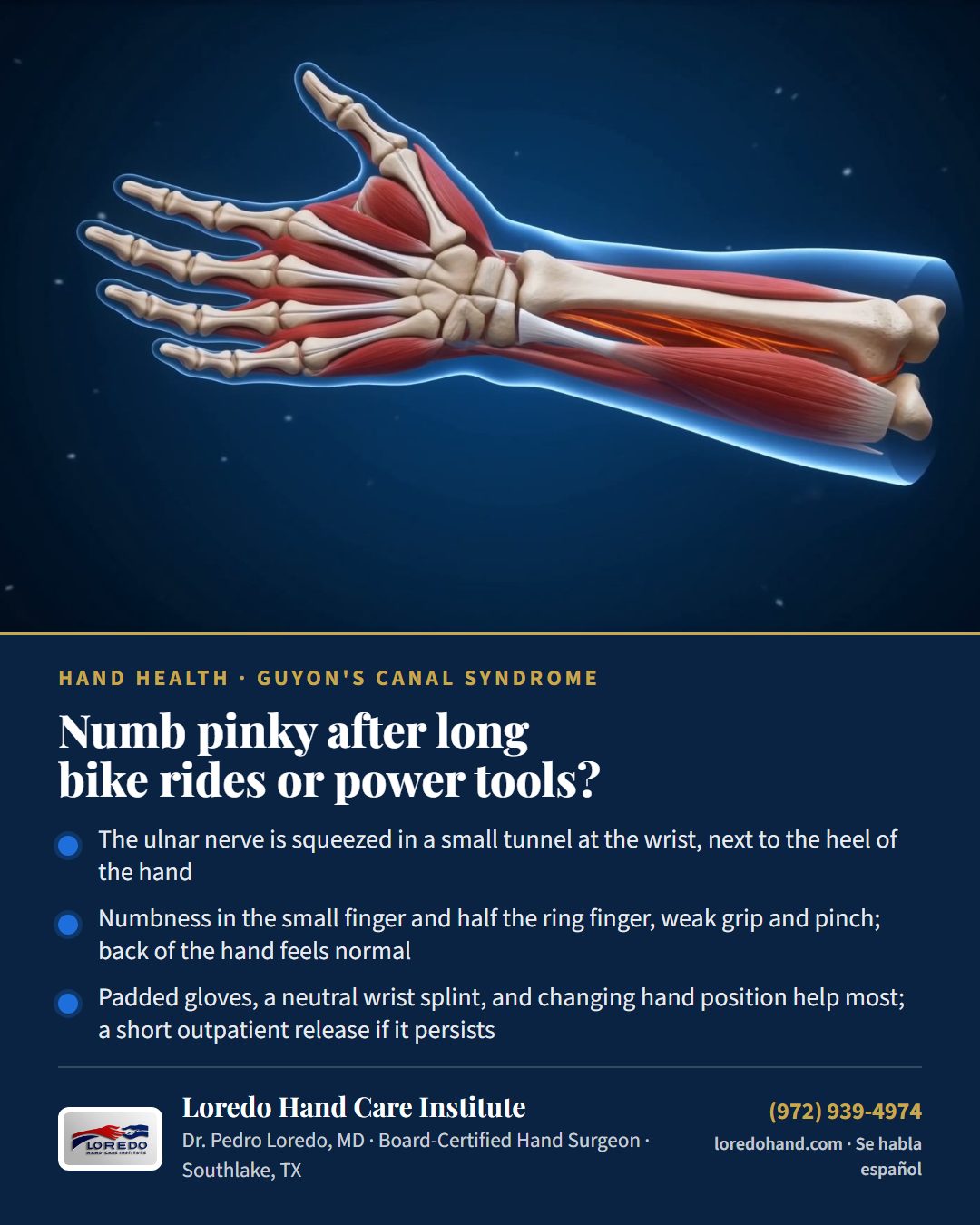
Guyon's canal syndrome is compression of the ulnar nerve where it passes through a small tunnel at the wrist, between two bones at the heel of the hand. Long-distance cyclists know it as handlebar palsy. Jackhammer and grinder operators, and people who lean on walkers or crutches, get it too. A small ganglion cyst inside the canal is the most common structural cause.
Warning signs
- Numbness or tingling in the small finger and the small-finger half of the ring finger
- Normal feeling on the back of the hand, which separates it from elbow-level nerve problems
- Weak grip and weak pinch; trouble with buttons, keys, and typing
- In long-standing cases, thinning of the muscle between the thumb and index finger
Treatment
Padded gloves, gel handlebar tape, anti-vibration gloves, and changing hand position relieve most cases, along with a neutral wrist splint at night and hand therapy for nerve gliding. If symptoms persist or the muscles are weakening, a short outpatient release of the canal roof takes pressure off the nerve; a cyst, if present, is removed at the same time.
Find this post on: Facebook Instagram YouTube LinkedIn
Questions patients ask
What is guyon's canal syndrome?
Guyon's canal syndrome is compression of the ulnar nerve where it passes through a small tunnel at the wrist, between two bones at the heel of the hand. Long-distance cyclists know it as handlebar palsy. Jackhammer and grinder operators, and people who lean on walkers or crutches, get it too. A small ganglion cyst inside the canal is the most common structural cause.
What are the warning signs of guyon's canal syndrome?
Numbness or tingling in the small finger and the small-finger half of the ring finger. Normal feeling on the back of the hand, which separates it from elbow-level nerve problems. Weak grip and weak pinch; trouble with buttons, keys, and typing. In long-standing cases, thinning of the muscle between the thumb and index finger.
How is guyon's canal syndrome treated?
Padded gloves, gel handlebar tape, anti-vibration gloves, and changing hand position relieve most cases, along with a neutral wrist splint at night and hand therapy for nerve gliding. If symptoms persist or the muscles are weakening, a short outpatient release of the canal roof takes pressure off the nerve; a cyst, if present, is removed at the same time.
Who treats guyon's canal syndrome near Southlake and Dallas-Fort Worth?
Dr. Pedro Loredo, a board-certified hand surgeon (General Surgery, American Board of Surgery; Hand Surgery, American Board of Plastic Surgery) at Loredo Hand Care Institute, 431 E State Hwy 114, Suite 380, Southlake, TX. New patients are seen within days. Call (972) 939-4974. Se habla español.
En español: ¿Meñique dormido después de andar en bici o usar herramientas?
El síndrome del canal de Guyon es la compresión del nervio cubital donde pasa por un túnel pequeño de la muñeca, entre dos huesos del talón de la mano. Los ciclistas de larga distancia lo conocen como parálisis del manubrio. También lo padecen quienes usan martillos neumáticos o esmeriladoras y quienes se apoyan en andaderas o muletas. Un quiste ganglionar pequeño dentro del canal es la causa estructural más común.
Señales de alerta
- Adormecimiento u hormigueo en el meñique y la mitad del anular
- Sensación normal en el dorso de la mano, lo que lo distingue de los problemas del nervio en el codo
- Agarre y pinza débiles; dificultad con botones, llaves y el teclado
- En casos de mucho tiempo, adelgazamiento del músculo entre el pulgar y el índice
Tratamiento
Guantes acolchados, cinta de gel en el manubrio, guantes antivibración y cambiar la posición de la mano alivian la mayoría de los casos, junto con una férula neutra de muñeca por la noche y terapia de mano para el deslizamiento del nervio. Si los síntomas persisten o los músculos se debilitan, una liberación ambulatoria corta del techo del canal quita la presión al nervio; si hay un quiste, se retira en el mismo procedimiento.
If this sounds like your hand
Call Loredo Hand Care Institute or start your forms online. New patients are seen within days; surgery, when needed, is scheduled at the first available opening. Se habla español.